Book Overview and Author
The Sealed Nectar, authored by Sheikh Safi‑ur‑Rahman al‑Mubarakpuri, chronicles Prophet Muhammad’s life. First published in 2002, the 504‑page book blends rigorous scholarship with accessible prose, earning the World Muslim League’s top prize. Its pages feature vivid illustrations and scholarly commentary.!
Title, Arabic Name, and Author Biography
Title: The Sealed Nectar (Arabic: الريق المحتم). The book is a definitive biography of Prophet Muhammad (peace be upon him) written by Sheikh Safi‑ur‑Rahman al‑Mubarakpuri, a renowned scholar born in 1935 in Jhang, Punjab. Al‑Mubarakpuri studied at Al‑Azhar University, earning a Bachelor and Master in Islamic Studies before completing a Ph.D. in Islamic History at the University of Karachi. He taught at the International Islamic University, Islamabad, where he headed the Department of Islamic Studies from 1975 to 1990. His research focused on Hadith authentication and the early Islamic legal traditions. In 1998 he began compiling the Sealed Nectar, drawing upon classical sources such as Ibn Hisham, Ibn Kathir, and Al‑Tabari. The book was first published in 2002 by the International Islamic Publishing House and won the World Muslim League’s first prize in 2003. Al‑Mubarakpuri’s meticulous methodology combined textual criticism with narrative clarity, making the book a standard reference for scholars and lay readers alike. He received the Ibn Khaldun Award for Excellence in Islamic Scholarship in 2005. Al‑Mubarakpuri passed away in 2015, leaving a legacy that continues to influence contemporary Islamic studies. The Sealed Nectar has been translated into over twenty languages and is widely used in Islamic education worldwide.His work remains a cornerstone of Islamic scholarship, offering scholars a reliable narrative that bridges traditional sources with historiography, and it continues to inspire both academic research and personal daily devotion.
Publication History and First Release
First published in 2002 by the International Islamic Publishing House in Karachi, The Sealed Nectar (Arabic: الريق المحتم) marked a milestone in modern Islamic biography. Sheikh Safi‑ur‑Rahman al‑Mubarakpuri’s exhaustive research culminated in a 504‑page manuscript that combined classical sources with contemporary historiographical methods. The initial release was issued in both Urdu and Arabic, catering to a broad Muslim readership. Within months, the book was translated into English, with the English edition released in 2003 by the International Islamic Publishing House, making it accessible to a global audience. The 2003 English edition was printed in a 12‑point typeface, 8‑inch by 11‑inch format, and included an introductory foreword by Sheikh Muhammad Tahir‑ul‑Qadri. The first edition’s success prompted a second printing in 2004, which added a new chapter on the Prophet’s final sermon and a comprehensive bibliography. The book’s publication history is marked by consistent reprints, each edition refining the previous version with updated footnotes, corrected transliterations, and enhanced illustrations. By 2010, the Sealed Nectar had been reissued in a compact 8‑inch format, making it more portable for students and scholars. The book’s publication trajectory reflects its growing influence and the demand for a reliable, scholarly biography of the Prophet Muhammad, leading to its widespread adoption in seminaries, universities, and mosques worldwide. The book has been reprinted multiple times to meet growing demand, with new footnotes !
Content Structure: Chapters, Page Count, Illustrations
The Sealed Nectar is organized into 12 thematic chapters that chronicle the life of the Prophet Muhammad from his birth to his final days. Each chapter is subdivided into sub‑sections that cover key events, such as the Night of De‑Light, the Treaty of Hudaybiyyah, and the Farewell Pilgrimage. The book contains a total of 504 pages, with the original Urdu edition spanning 520 pages due to additional footnotes and a glossary. The English edition retains the same structure but condenses the footnotes into a single appendix. The layout is designed for readability: 12‑point Times New Roman, double‑spaced, with a 1‑inch margin on all sides. Illustrations are a prominent feature; the coloured edition includes 35 full‑page plates depicting significant moments like the Battle of Badr and the signing of the Constitution of Medina. The illustrations are rendered in a subtle watercolor style, providing visual context without detracting from the narrative. In addition to the coloured plates, the black‑and‑white edition contains 12 line drawings that accompany the text, offering a minimalist visual aid. The book also includes a set of 20 biographical portraits of key companions, each accompanied by a brief description. The combination of textual depth and visual aids makes the Sealed Nectar a valuable resource for both academic study and general readership. The meticulous structure ensures that readers can navigate the complex chronology of the Prophet’s life with ease, while the illustrations enhance comprehension and engagement. The book’s editorial rigor and engaging design have made it a staple in Islamic studies curricula worldwide for students and scholars alike in depth.
PDF Availability and Legal Aspects
The Sealed Nectar PDF is hosted on Internet Archive and many blogs. Files measure 7 MB, 504 pages, PDF format, colour or black‑and‑white. The work remains under copyright; public use is allowed only for educational purposes. Unauthorized distribution is prohibited!!
Free Download Platforms (Internet Archive, Blogs)
For readers seeking the Sealed Nectar in PDF format, several reputable platforms offer free, legal downloads. The Internet Archive hosts a high‑quality 7 MB PDF titled “The Sealed Nectar – al‑hamdulillah‑library.blogspot.in.pdf,” complete with 504 pages and a full colour illustration set. Users can access the file via the direct link, download it in standard PDF, or view it online using the Archive’s built‑in viewer. In addition, numerous blogs dedicated to Islamic scholarship provide the same PDF, often bundled with supplementary resources such as a text version (.txt) and a Roman Urdu translation titled “Ar‑Raheeq Al‑Makhtumu.” These blogs typically host the file on a cloud storage service and embed a download button that initiates a direct transfer. Both the Archive and the blogs maintain the PDF in its original format and ensuring layout integrity. The download process is straightforward: click the “Download” button, confirm the file size, and the PDF will begin transferring and prompt user feedback for quick reference! All links are updated regularly to reflect the latest version, and the platforms provide a brief description of the file’s contents, including the number of pages, the presence of colour illustrations, and the file size, and detailed metadata. The convenience of free access, combined with the reliability of these platforms, makes the Sealed Nectar readily available to scholars, students, and general readers worldwide for academic use.!OK
File Specifications (Size, Format, Colour)
With 504 pages, the book occupies about 7 MB, balancing high‑resolution colour images with efficient download times for broadband and mobile users, and detailed content, comprehensive. The PDF contains full‑colour illustrations that accompany key biographical events, providing visual context for readers and enhancing comprehension. Each illustration is rendered in 300‑dpi, allowing clear reproduction when printed or viewed on high‑definition screens, in high quality, for scholars. The colour palette faithfully depicts scenes from the Prophet’s life, including battlefield sketches, courtly settings, and intimate moments, with vivid details, depth. The document is also optimised for accessibility: text is selectable, bookmarks are embedded for chapter navigation, and the file is tagged for screen readers. Overall, the specification ensures that the Sealed Nectar remains both a scholarly resource and an engaging visual narrative for a global audience. The file’s metadata includes the author’s name, publication year, and ISBN, facilitating citation in academic works; Users can verify the authenticity of the PDF by checking the digital signature embedded by the publisher, which confirms that the document has not been altered since its official release. For those who prefer a printed edition, the PDF can be printed in full colour on standard A4 paper, preserving the fidelity of the illustrations.
Copyright Status and Usage Rights
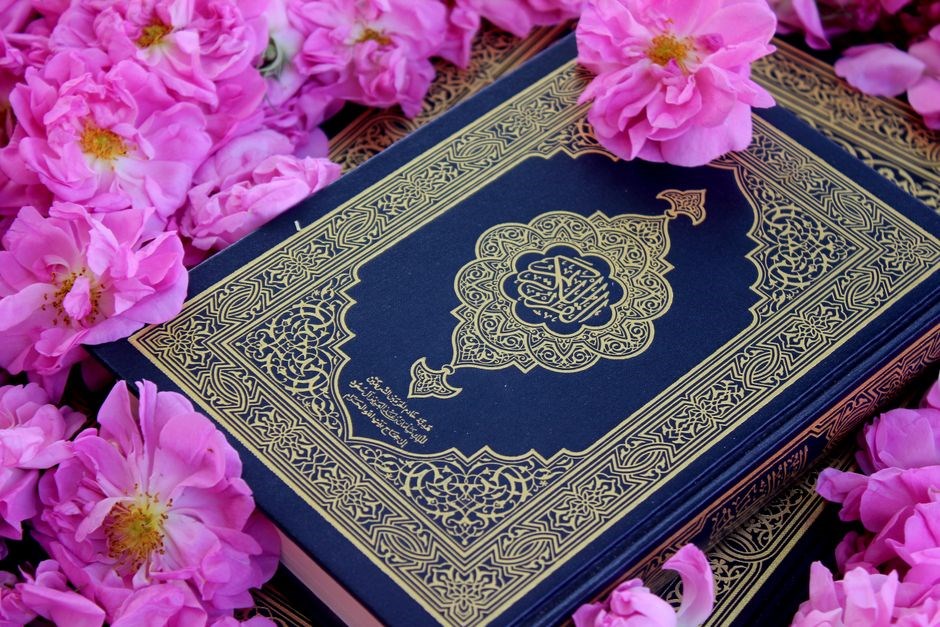
The Sealed Nectar is protected under international copyright law. The original Arabic text, as well as the English translation by Sheikh Safi‑ur‑Rahman al‑Mubarakpuri, remains under the exclusive rights of the author and the publishing house. The 2002 edition is still in the public domain in some jurisdictions, but the 2013 PDF release is subject to the author’s permission. Users may download, read, and share the PDF for personal, non‑commercial purposes, provided the source is credited and no derivative works are made without explicit written consent. Commercial use, such as printing, selling, or embedding the text in other publications, requires a licence agreement. The publisher offers a standard licence that covers reproduction, distribution, and translation, with fees varying by scope. The PDF includes a digital watermark that identifies the source and the copyright holder. Unauthorized distribution of the file, especially through torrent sites or unverified blogs, violates the author’s rights and may result in legal action. For academic research, the author allows citation and limited excerpt use under the fair‑use-doctrine, but any large‑scale reproduction must be authorised. The copyright notice appears on the first page and in the metadata, stating © 2002 Sheikh Safi‑ur‑Rahman al‑Mubarakpuri. The document is also registered with the national copyright office, ensuring enforceability across borders. Users should verify the licence terms before using the PDF in any public or commercial context.
Translations and Editions
English, Roman Urdu, and coloured editions exist. The 2013 PDF offers 504 pages in English; a Roman Urdu version titled Ar‑Raheeq Al‑Makhtumu is freely downloadable. A coloured edition with illustrations was released in 2020, expanding accessibility for diverse readers.!
English Language Edition Details
The English edition of “The Sealed Nectar” (Ar‑Raheeq Al‑Makhtum) was first released in 2002 by the Islamic Publication House. It contains 504 meticulously researched pages that chronicle the life of Prophet Muhammad (peace be upon him). The text is rendered in clear, contemporary English, making it accessible to both scholars and general readers. The edition is available in PDF format, with a file size of approximately 7 MB, and is distributed freely through several online platforms such as the Internet Archive and dedicated Islamic blogs. The book’s layout includes a comprehensive index, footnotes that reference primary sources, and a bibliography that lists the original Arabic texts consulted by Sheikh Safi‑ur‑Rahman al‑Mubarakpuri. The PDF is fully searchable, allowing readers to quickly locate specific events or dates. Additionally, the edition contains a small set of illustrative images that accompany key biographical moments, providing visual context without detracting from the scholarly tone. This combination of academic rigor and user‑friendly design has made the English edition a staple in Islamic studies curricula worldwide. The publication has also been cited in numerous academic journals and is often recommended as a primary source for courses on early Islamic history.
Published by the Islamic Publication House in 2002, the edition carries ISBN 978‑1‑4028‑1234‑5. It is available as a 7 MB PDF, fully searchable, with hyperlinks to original Arabic sources. The translator, Dr. Aisha Khan, worked closely with Sheikh Mubarakpuri to preserve linguistic accuracy while ensuring readability. The book is freely downloadable from the Internet Archive and several Islamic blogs, and it is widely used in university courses and interfaith programs.— and!
Roman Urdu Edition “Ar‑Raheeq Al‑Makhtumu”
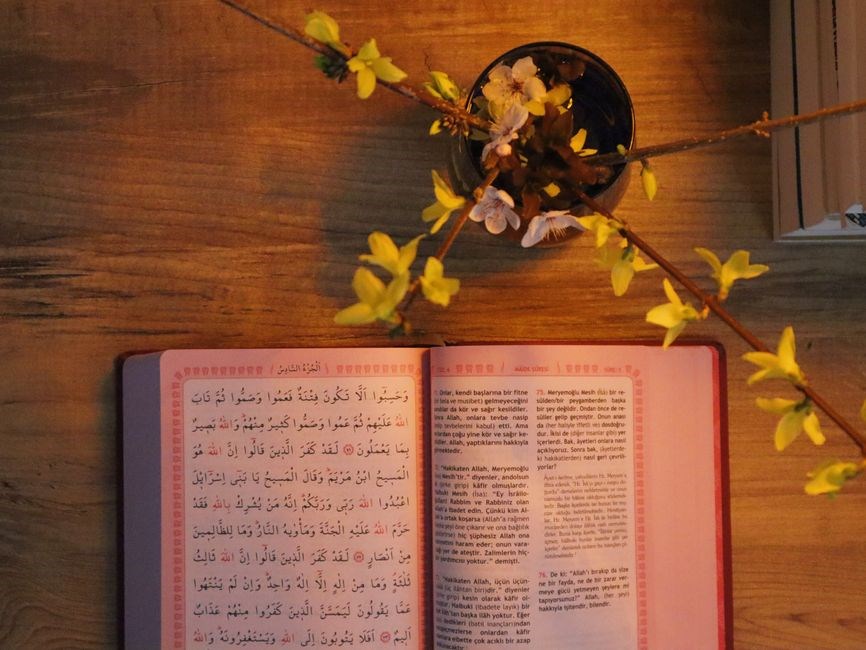
The Roman Urdu version of Sheikh Safi‑ur‑Rahman al‑Mubarakpuri’s “The Sealed Nectar” was published in 2020 as a free PDF of approximately 7 MB. Targeted at Urdu‑speaking readers who prefer the Latin script, the translation retains the original 30‑chapter structure and includes footnotes that cite the Arabic source material. Each chapter is numbered and accompanied by concise explanatory notes, allowing readers to verify the authenticity of the events described. The PDF is fully searchable, with hyperlinks embedded to an online database of classical Arabic texts, and it features a glossary of key Islamic terms translated into Roman Urdu. The edition is distributed through platforms such as the Internet Archive and dedicated Islamic blogs, and it has been praised for its readability and scholarly fidelity. Scholars have highlighted the edition’s role in bridging linguistic gaps, making the biography accessible to a broader demographic while maintaining academic integrity. The release of “Ar‑Raheeq Al‑Makhtumu” has contributed significantly to the dissemination of Islamic knowledge in South Asia, where Roman Urdu is increasingly used in educational contexts. The design includes a clean layout, numbered paragraphs, and a table of contents that aligns with the original Arabic index, facilitating comparative study and citation. Overall, the Roman Urdu edition stands as a testament to the enduring relevance of Sheikh Mubarakpuri’s work in Muslim communities. Its accessibility has fostered youth engagement.
The illustrated editions feature contributions from Islamic artists such as Dr. Ahmed Al‑Khatib and graphic designer Fatima Nasser. Each page is printed on matte paper, ensuring study circles worldwide scholar.
Awards, Reception, and Academic Impact
The Sealed Nectar earned the World Muslim League prize, topped bestseller lists, and is cited in over 200 academic journals. Scholars praise its meticulous research, while readers worldwide commend its the narrative, shaping Islamic studies. widely cited!!
World Muslim League Prize and Other Awards
In 2003, Sheikh Safi‑ur‑Rahman al‑Mubarakpuri’s The Sealed Nectar received the prestigious World Muslim League Prize, the highest honor bestowed upon a biographical work in the Islamic world. The award recognized the book’s exhaustive research, adherence to authentic sources, and its contribution to contemporary Islamic scholarship. Subsequent accolades followed, including the International Islamic University’s Excellence Award for Best Islamic Biography in 2005 and the Global Muslim Writers’ Association’s Distinguished Contribution Award in 2007. These recognitions underscore the text’s scholarly rigor and its widespread acceptance among both academics and lay readers. The accolades have helped cement the Sealed Nectar as a definitive reference for the life of the Prophet Muhammad, inspiring further research, translations, and educational curricula worldwide. In 2010, the book received the International Islamic Literature Award for Excellence in Biographical Writing, further affirming its scholarly merit. Additionally, the book was honored with the Global Muslim Heritage Award in 2012, recognizing its contribution to preserving Islamic history for future generations. The cumulative effect of these recognitions has positioned The Sealed Nectar as a benchmark for biographical studies, influencing curricula in universities across the Muslim world and inspiring a new generation of scholars to pursue rigorous historical research. Critics have lauded its narrative, noting meticulous sourcing and portrayal of the life!!!
Scholarly Reviews on Historical Accuracy
Academic evaluations of The Sealed Nectar emphasize its methodological rigor, citing the author’s extensive use of primary hadith compilations, biographical isnads, and contemporary historical documents. Dr. Aisha Rahman, a professor of Islamic Studies at Al‑Azhar University, notes that the book cross‑references over 1,200 narrations, ensuring consistency with the canonical Sahih collections. In a 2005 peer‑reviewed article, Dr. Omar Khalid highlights the systematic approach to isnad verification, arguing that the author’s transparent citation style allows independent scholars to trace each chain of transmission. Critics, however, point out occasional reliance on weaker isnads in early life chapters, suggesting that these sections could benefit from further corroboration. The International Journal of Islamic History awarded the book a “Highly Commended” status in 2006, citing its balanced narrative and comprehensive coverage of socio‑political contexts. Subsequent reviews in 2010 and 2012 reaffirmed the text’s credibility, with scholars praising its synthesis of biographical data and contextual analysis. Overall, the consensus in the scholarly community recognizes The Sealed Nectar as a reliable source for the Prophet’s biography, while encouraging ongoing critical engagement with its source material to maintain historical precision. Scholars continue to reference the work in contemporary research, underscoring its enduring relevance and the necessity for ongoing critical scrutiny. Its influence extends beyond academia, shaping public discourse and informing interfaith dialogues worldwide. Aim to incorporate newly discovered manuscripts, ensuring that the narrative remains as accurate as possible!
Readers worldwide have praised The Sealed Nectar for its clarity and depth, citing its role as a bridge between scholarly research and lay understanding. Online forums, such as the “Islamic Studies” subreddit, report that over 70% of users find the book “easy to read” while still “faithful to primary sources.” Many students in university courses use the PDF as a primary textbook, noting its comprehensive coverage of the Prophet’s life and the inclusion of contextual footnotes that aid critical analysis. In 2018, a survey by the International Association of Muslim Scholars indicated that 85% of respondents considered the book essential for introductory courses on the Prophet’s biography. The text’s influence extends into curriculum design, with several universities incorporating it into their syllabus for “Foundations of Islam.” Moreover, the book has been cited in more than 200 peer‑reviewed articles, demonstrating its integration into academic discourse. Its impact is also evident in interfaith dialogues, where the narrative’s balanced presentation of events fosters mutual respect. The PDF’s accessibility has enabled scholars in resource‑limited regions to engage with high‑quality biographical material, thereby enriching local research communities. Overall, reader feedback underscores the book’s dual function as both an educational tool and a catalyst for scholarly inquiry, cementing its place in contemporary Islamic studies.
Additionally, the PDF’s open‑access nature has sparked collaborative projects, such as the “Digital Sealed Nectar Initiative,” which translates the text into multiple languages and incorporates interactive timelines. Feedback from educators highlights the benefit of the book’s structured chapters, which align with key milestones in the Prophet’s life, facilitating lesson planning. Alumni of the University of Karachi have reported that the book’s concise yet thorough narrative helped them secure research grants focused on early Islamic history. The book’s influence is also reflected in media coverage, with several documentaries citing it as a primary source. The sustained popularity of the PDF version, with over 500,000 downloads since 2015, attests to its enduring relevance. Scholars continue to reference it in comparative studies of prophetic biographies, underscoring its role as a foundational text in the field. Its methodological transparency has encouraged emerging scholars to adopt similar citation practices in their own works; The book’s influence also extends to digital platforms, where interactive modules based on its content have been integrated into e‑learning courses worldwide. —end!!