Ebike Controller Manual: A Comprehensive Guide
Navigating the complexities of ebike systems requires a detailed understanding of the controller, ensuring optimal performance and longevity. This guide provides essential insights,
troubleshooting, and programming techniques for a confident riding experience.
Ebike controllers are the brains of your electric bicycle, orchestrating the flow of power between the battery, motor, and other components. They’re sophisticated pieces of electronics responsible for translating rider input – from the throttle or pedal assist system (PAS) – into the appropriate motor output. Understanding these controllers is paramount for both maintenance and customization.
Modern controllers aren’t simply on/off switches; they manage crucial functions like current limiting, voltage regulation, and motor control type (sine wave or trapezoidal – discussed later). They also often incorporate safety features, protecting against overvoltage, undervoltage, and overheating. As highlighted in online forums, troubleshooting often involves software and bench testing to determine optimal settings for your specific motor and battery configuration. A well-matched controller, like a 48v model, significantly impacts speed and range, as noted in recent articles.
What Does an Ebike Controller Do?
The ebike controller’s primary function is power management, acting as the central hub for electrical energy. It receives DC power from the battery and converts it into the appropriate format – typically three-phase AC – to drive the motor. This conversion isn’t just about changing the current type; it’s about controlling the power delivered, enabling features like variable speed and regenerative braking.
Controllers interpret signals from the throttle and/or PAS sensor, dictating how much power is sent to the motor. They also monitor critical parameters like battery voltage, motor temperature, and current draw, implementing safety cutoffs to prevent damage. As discussed in online resources, controllers can autodetect battery voltage, but misdetection can occur. Ultimately, the controller ensures a smooth, efficient, and safe riding experience by precisely modulating power delivery.
Controller Types: Sine Wave vs. Trapezoidal
Ebike controllers primarily utilize two control methods: sine wave and trapezoidal. Trapezoidal controllers, the older technology, deliver power in a stepped, trapezoid-shaped waveform. While simpler and often more affordable, this method can result in a less smooth and potentially noisier ride, and increased motor wear over time.
Sine wave controllers, conversely, provide a smoother, sinusoidal waveform, mimicking the natural power delivery of traditional motors. This results in quieter operation, improved efficiency, and reduced stress on motor components, extending their lifespan. Bench testing, as highlighted by online communities, is crucial for determining optimal motor control. While sine wave controllers generally offer superior performance, compatibility with specific motors is key. Choosing the right type depends on your motor and desired riding characteristics.
Voltage Compatibility: 36V, 48V, and 72V Systems
Ebike controllers are designed to operate within specific voltage ranges, commonly 36V, 48V, and 72V. Selecting a controller compatible with your battery system is paramount. A mismatch can lead to controller failure or, worse, damage to the battery. Higher voltage systems generally deliver more power and efficiency, resulting in increased speed and range.
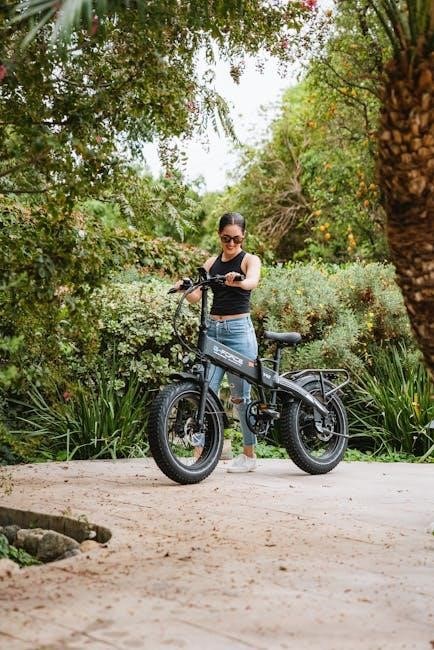
However, components throughout the entire system – motor, battery, and controller – must all be rated for the same voltage. Some controllers, as noted in forum discussions, feature auto-detection, attempting to identify the battery voltage. However, relying solely on this feature isn’t advisable; always verify compatibility. Understanding voltage requirements is crucial for avoiding disruptions and ensuring optimal system longevity, optimizing both speed and range.
Understanding Controller Specifications
Decoding controller specifications is vital for ensuring compatibility and performance. Key parameters include wattage and amperage ratings, motor compatibility (sensored vs. sensorless), and connector types. Wattage indicates the controller’s maximum power output, while amperage defines the current it can handle continuously. Matching these ratings to your motor and battery is essential to prevent overheating and damage;
Controllers support either sensored or sensorless motors, influencing startup smoothness and low-speed control. Connector types and pinouts dictate how the controller interfaces with other components. Careful attention to these details, alongside programming requirements as highlighted by user experiences, ensures a seamless integration. A well-matched controller optimizes efficiency and performance, balancing speed and range.
Wattage and Amperage Ratings
Wattage and amperage are fundamental controller specifications dictating performance capabilities. Wattage, calculated as Voltage x Amperage, represents the maximum power the controller can deliver to the motor; Higher wattage generally equates to greater speed and acceleration, but also increased current draw. Amperage signifies the continuous current the controller can handle without overheating; exceeding this limit risks damage.
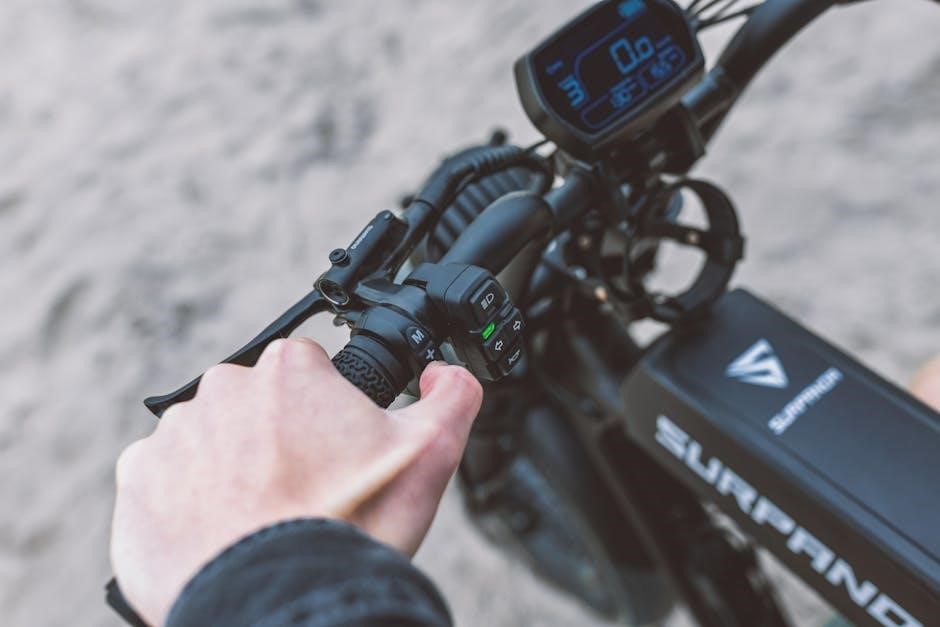
Selecting appropriate ratings requires careful consideration of your motor’s specifications and intended use. A mismatch can lead to inefficiencies or component failure. Users often emphasize bench testing to fine-tune these settings. Understanding these ratings is crucial for optimizing both speed and range, as a well-matched controller maximizes efficiency and system longevity, avoiding disruptions.
Motor Compatibility (Sensored vs. Sensorless)
Ebike motors broadly fall into two categories: sensored and sensorless, impacting controller compatibility. Sensored motors utilize Hall sensors to provide precise rotor position feedback, enabling smoother startup and low-speed control. These require controllers specifically designed to interpret Hall sensor signals. Sensorless motors, conversely, estimate rotor position, often relying on back EMF sensing.
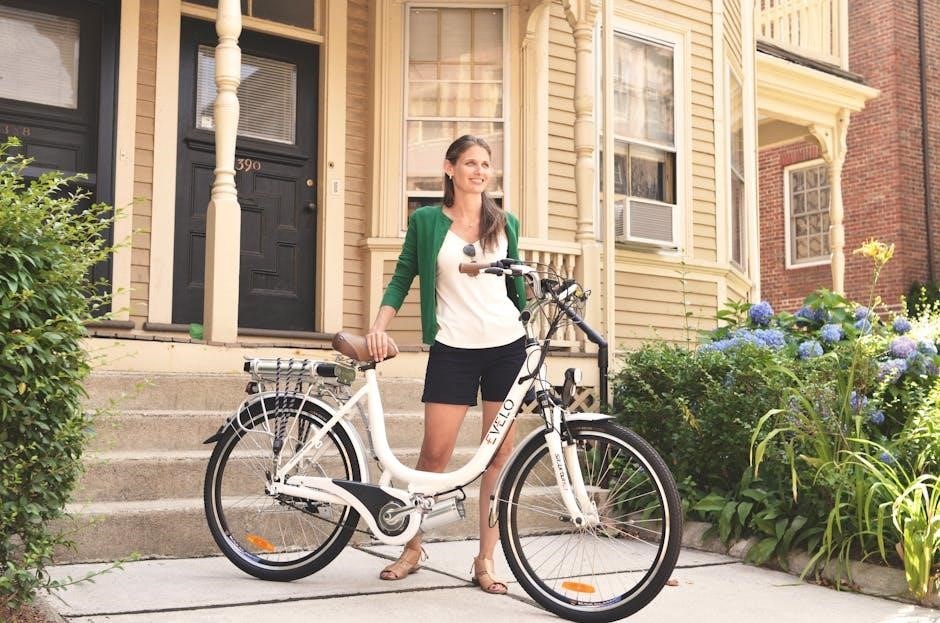
Controllers supporting both types offer versatility, but bench testing is often necessary to determine optimal configuration – whether BLDC control or another method suits your motor best. Some controllers feature auto-detection, but manual configuration may yield superior performance. Choosing the right compatibility ensures efficient power delivery and prevents jerky operation, contributing to a more enjoyable ride.
Connector Types and Pinouts
Ebike controllers employ various connector types, demanding careful attention to pinouts during installation and troubleshooting. Common connectors include Anderson Powerpoles, bullet connectors, and JST connectors, each requiring specific mating counterparts. Incorrect wiring can lead to controller failure or motor damage.
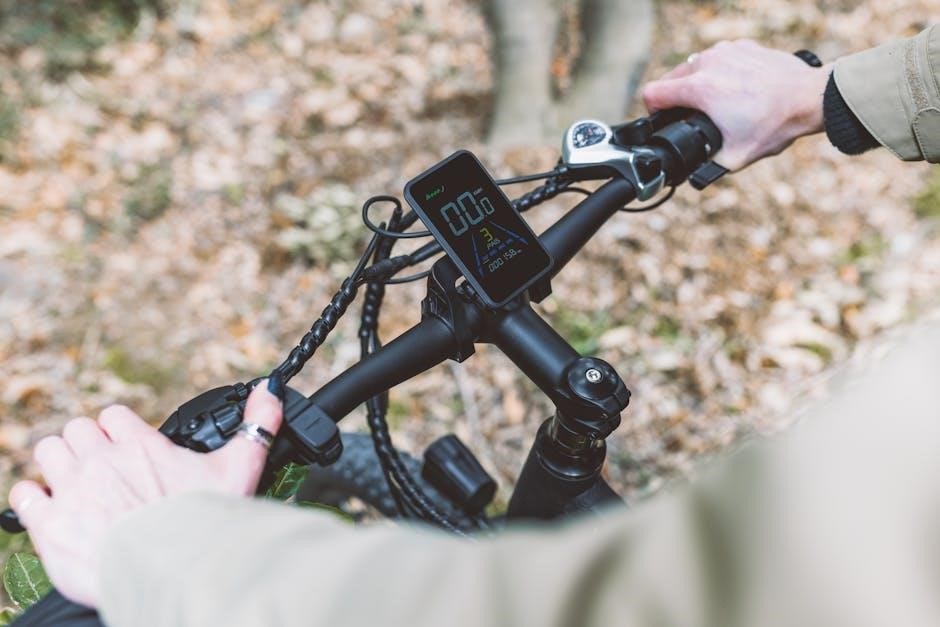
Pinouts dictate the function of each wire – battery positive/negative, motor phase wires (typically three), throttle input, brake lever inputs, and display communication. Thoroughly consult your controller’s documentation to identify the correct pin assignments. A 5V or 3V throttle input is common, requiring matching voltage compatibility. Mismatched connections or loose wiring are frequent causes of intermittent issues, emphasizing the importance of secure and accurate connections.
Ebike Controller Wiring Diagram Basics
Understanding ebike controller wiring diagrams is crucial for successful installation and maintenance. A typical diagram illustrates connections between the battery, controller, motor, throttle, display, and other peripherals like brakes and lights. Key components include the battery positive and negative leads, connecting directly to the controller’s power input.
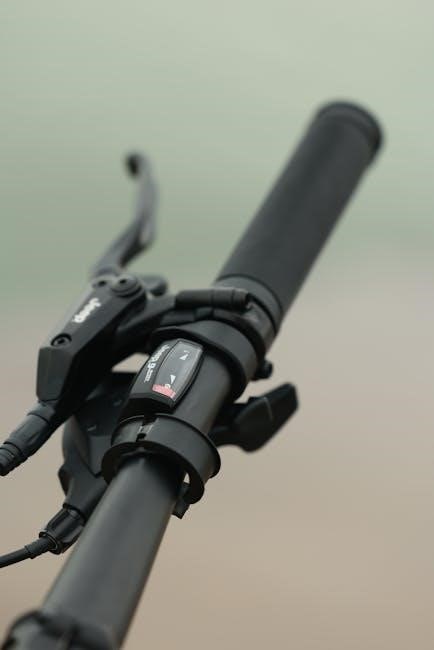
Motor phase wires (usually three) connect to the controller’s motor output. The throttle provides speed control, utilizing either a 3V or 5V signal. Brake levers interrupt power, enhancing safety. Displays communicate with the controller via a designated port. Always double-check polarity and secure all connections. Incorrect wiring can cause immediate damage, so meticulous attention to detail is paramount.
Troubleshooting Common Ebike Controller Issues
Diagnosing ebike controller problems requires a systematic approach. A “no power” scenario often stems from a loose battery connection, blown fuse, or faulty power switch. Throttle issues can manifest as erratic speed or no response; check wiring and throttle signal voltage (3V or 5V). Display faults, including error codes, indicate communication problems or internal controller errors.
Intermittent problems, as seen in forum discussions, can be particularly challenging. Consider connection integrity and potential battery voltage misdetection. Bench testing, alongside software diagnostics, is vital. Remember, a failing controller might be more cost-effective to replace than repair, especially if the root cause remains elusive;
No Power/Controller Not Turning On
When your ebike controller fails to power on, begin with the basics. Verify the battery is fully charged and securely connected – a loose connection is a frequent culprit. Inspect the main fuse, often located near the battery or controller, for any signs of damage or breakage; replace if necessary. Examine the power switch, ensuring it’s functioning correctly and not internally damaged.
Further investigation involves checking the controller’s power input wiring for continuity. A multimeter can confirm voltage is reaching the controller. If voltage is present but the controller remains unresponsive, it may indicate an internal fault requiring professional diagnosis or replacement. Remember to disconnect the battery before any wiring inspection.

Throttle Problems and Solutions
Erratic or unresponsive throttle behavior is a common ebike issue. First, confirm the throttle connector is securely fastened to the controller. Many controllers support both 3V and 5V throttles; ensure compatibility and correct wiring. Use a multimeter to test the throttle’s voltage output while twisting the grip – it should smoothly increase. A jerky or inconsistent signal indicates a faulty throttle.
If the throttle tests good, the problem might lie within the controller’s programming. Some controllers require throttle calibration or mapping. Refer to your controller’s manual or programming software for instructions. Check for loose connections within the throttle housing itself. If issues persist, consider bench testing with a known working throttle to isolate the problem.
Display Faults and Error Codes
Ebike displays can exhibit various faults, ranging from complete failure to displaying error codes. A blank display often indicates a power supply issue – check the display’s connector to the controller and the battery voltage. Error codes, if present, are crucial for diagnosis; consult your controller’s manual for a specific code interpretation. Common errors relate to motor faults, sensor issues, or communication problems between the controller and display.
If the display reads voltage only, as sometimes occurs with basic setups, the controller may not be fully communicating. Try resetting the controller (see dedicated section). Ensure the display is compatible with your controller’s communication protocol. Bench testing the display with a known working controller can help determine if the display itself is faulty.
Controller Programming and Configuration
Ebike controllers often require programming to optimize performance and customize settings. This involves using dedicated software, typically connected via USB, to adjust parameters like motor current limits, speed restrictions, and throttle response curves. Understanding your controller’s specific programming interface is vital; manuals and online resources are essential.
Bench testing is crucial before riding. Determine if your motor functions best with BLDC or Hall sensor configuration during programming. Experiment with different settings to find the optimal balance between power, efficiency, and reliability. Remember to carefully document any changes made, allowing for easy reversion to previous settings if needed. Reddit forums often share valuable insights and software links.

Using Programming Software (Examples & Downloads)
Several software options exist for programming ebike controllers, varying based on controller brand and model. Common examples include software provided directly by controller manufacturers (often requiring registration) and open-source alternatives like Tune Force. These programs allow modification of parameters such as maximum speed, acceleration, and current limits.
Downloading software requires caution; always obtain files from reputable sources to avoid malware. Many online communities, like those found on Endless Sphere, share links and tutorials. Before connecting, ensure you have the correct USB-to-serial adapter if required. Remember that incorrect programming can damage your controller or motor, so proceed carefully and back up original settings whenever possible. Bench testing after each change is highly recommended.

Bench Testing Your Ebike Controller
Before installing a controller onto your ebike, thorough bench testing is crucial. This involves powering the controller with a battery (safely!) and verifying functionality without the risk of damaging the bike. Begin by determining if your motor is sensored or sensorless, and whether it requires BLDC or Hall sensor configuration within the software.
Test throttle input using a multimeter to confirm proper voltage (typically 3V or 5V). Observe the motor’s response to throttle commands – it should spin smoothly without jerking. Check for any unusual noises or overheating. A power supply can substitute a battery for initial tests. Remember to disconnect the motor before making software adjustments. Careful bench testing prevents costly mistakes and ensures a safe, functional ebike.
BLDC vs. Hall Sensor Configuration
Understanding the difference between Brushless DC (BLDC) and Hall sensor motor configurations is vital for proper controller setup. BLDC motors rely on the controller to electronically commutate the windings, requiring precise timing. Hall sensors, integrated within the motor, provide the controller with rotor position feedback, enabling accurate commutation.
If your motor has Hall sensors, the controller must be configured to utilize this feedback. Incorrect settings can lead to jerky operation, overheating, or even motor damage. Sensorless BLDC operation relies on back EMF sensing, which can be less efficient at low speeds. Bench testing, as previously described, helps determine the optimal configuration for your specific motor. Software selection and parameter adjustments are key to unlocking peak performance.
Testing Throttle Input (3V & 5V)
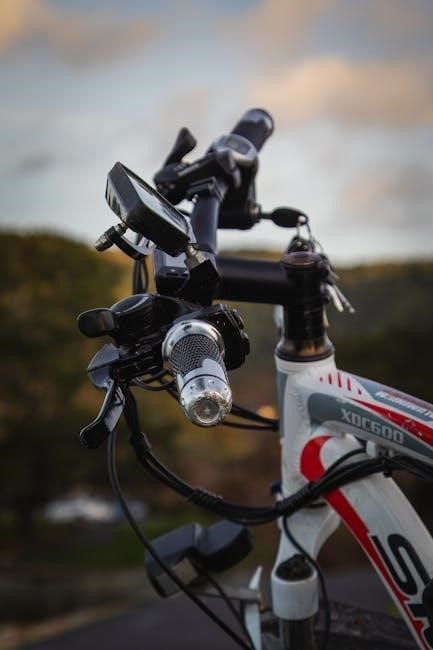
Verifying correct throttle input is crucial during bench testing. Ebike controllers typically accept either 3V or 5V throttle signals; using the wrong voltage can prevent operation or damage the controller. Carefully check your throttle’s specifications.
With the controller powered (but motor disconnected!), use a multimeter to measure the voltage output of the throttle as you twist it. Confirm it aligns with the controller’s requirements. If your display has throttle input capabilities, as noted in online forums, utilize it for testing. Observe the controller’s response to throttle input via the programming software – a smooth, linear increase in reported throttle position is expected. Incorrect readings indicate a wiring issue or incompatible throttle.
Resetting Your Ebike Controller
Occasionally, an ebike controller may require a reset to resolve minor glitches or restore default settings. This process can often address issues like erratic behavior or communication errors. The specific reset procedure varies by controller model, so consult your controller’s documentation first.
A common method involves disconnecting the battery for an extended period (10-15 minutes) to fully discharge the controller’s capacitors. Some controllers feature a dedicated reset button or require a specific sequence of key presses during power-up. Online resources, like the Endless Sphere forum, suggest that auto-detecting controllers might misinterpret battery voltage, making a reset necessary. After resetting, re-check all settings and perform bench testing to ensure proper functionality before reinstalling.
Controller Auto-Detection of Battery Voltage
Many modern ebike controllers boast auto-detection capabilities, simplifying setup by automatically identifying the battery voltage (36V, 48V, or 72V). This feature eliminates the need for manual configuration, streamlining the installation process. However, this convenience isn’t always foolproof. As discussed on the Endless Sphere forum, some controllers can misinterpret a fully charged lower voltage battery as a depleted higher voltage one.
For instance, a fully charged 36V battery might be incorrectly identified as a nearly empty 48V battery, leading to operational issues. If you suspect incorrect voltage detection, a controller reset is often the first troubleshooting step. Always verify the detected voltage on the controller’s display (if equipped) and double-check compatibility before operation.
Replacing an Ebike Controller: A Step-by-Step Guide
Replacing an ebike controller requires careful attention to detail, but is manageable with the right approach. First, disconnect the battery to ensure safety. Document the existing wiring connections – photos are invaluable! Carefully remove the old controller, noting the mounting hardware. Install the new controller, securing it properly.
Reconnect all wires, meticulously matching them to your documentation. Double-check all connections before reconnecting the battery. If issues arise, consider swapping parts from a complete, used ebike as suggested on Endless Sphere. Bench testing (discussed elsewhere) is crucial before a full ride. Finally, perform a thorough system check, verifying throttle, display, and motor function.
Finding Replacement Controllers (Tesway US & Similar)
Sourcing a replacement ebike controller demands careful consideration of compatibility and reliability. Tesway US is frequently mentioned as a supplier, offering a range of options. When searching, prioritize matching the voltage (36V, 48V, 72V) and wattage of your original controller.
Pay close attention to motor compatibility – sensored versus sensorless – as this is critical for proper operation. Online forums, like Endless Sphere, can provide valuable insights into reputable brands and specific models. Compare specifications carefully, and read customer reviews before purchasing. Consider purchasing from vendors with good return policies, in case of compatibility issues. Ensure the connector types align with your existing wiring harness to simplify installation.
Optimizing Controller Settings for Speed and Range
Fine-tuning your ebike controller settings unlocks enhanced performance and efficiency; Programming software allows adjustments to parameters influencing speed and range, but proceed cautiously. Lowering current limits can extend range, while increasing them boosts acceleration and top speed – at the cost of battery life.
Understanding motor characteristics is key; some motors respond better to specific settings. Experiment with throttle curves to tailor the power delivery to your riding style. A well-matched controller, as highlighted in discussions about 48v systems, optimizes both. Bench testing, as suggested by Reddit users, helps identify optimal configurations before hitting the road. Remember to prioritize safety and adhere to local regulations regarding ebike speed limits.