SanDisk MP3 Player Manual: A Comprehensive Guide (Updated 01/26/2026)
Welcome! This guide provides detailed instructions for SanDisk Sansa MP3 players, including access to manuals like the TakeTV and slotMusic versions, available for PDF download.
SanDisk’s Sansa line represents a significant chapter in the history of portable digital audio. These players, known for their compact designs and user-friendly interfaces, offered a compelling alternative to the dominant iPod during the mid-2000s and beyond. This comprehensive manual aims to serve as a central resource for all SanDisk Sansa owners, both current and those revisiting classic models.
From the basic functions of powering on and transferring music, to more advanced features like playlist creation and firmware updates, we’ll cover everything you need to know. We will also address common troubleshooting issues, such as players failing to power on or experiencing difficulties with file transfers. Resources for locating specific model manuals, including the Sansa TakeTV and slotMusic versions – often found as PDF downloads on sites like Manualzz – will be detailed.
This guide isn’t just for current users; it’s a historical record and support system for discontinued models, ensuring your Sansa continues to deliver enjoyable listening experiences.
Historical Overview of SanDisk Sansa Models
SanDisk entered the portable music player market in 2005 with the original Sansa e200 series, quickly establishing a reputation for affordability and expandable storage via SD cards. This contrasted with Apple’s more closed ecosystem. Subsequent models, like the Sansa c200 and the innovative Sansa Fuze, built upon this foundation, introducing features like customizable skins and robust playlist management.
The Sansa Clip, renowned for its incredibly small size and integrated clip, became a popular choice for active users. Later iterations, such as the Sansa View and the Sansa TakeTV (featuring video playback capabilities), broadened the lineup. Manuals for these models, including PDF downloads readily available through resources like Manualzz, documented their evolving features.
Despite strong competition, SanDisk continued to refine the Sansa line until discontinuing production in 2011, leaving behind a legacy of accessible and versatile MP3 players.
Sansa Clip vs. Sansa Fuze vs. Sansa View
The Sansa Clip prioritized portability, featuring a minimalist design and a convenient clip for attaching to clothing. It excelled for workouts and on-the-go listening, though its screen was basic. The Sansa Fuze offered a larger, more vibrant display and customizable skins, enhancing the user experience with visual flair and personalization options. Manuals detailed these cosmetic differences.

In contrast, the Sansa View stood out with its larger screen capable of displaying video content, making it suitable for watching short clips or podcasts. It bridged the gap between audio and video playback, though battery life suffered accordingly.
Each model catered to different needs: Clip for simplicity, Fuze for style, and View for multimedia. Finding specific manuals, like those available on Manualzz, helps understand each model’s unique capabilities.
Understanding Common SanDisk Sansa Features
SanDisk Sansa players, despite model variations, shared core functionalities. A central feature was support for multiple audio formats – MP3, WMA, and AAC – ensuring broad music library compatibility. Most models included a built-in FM radio tuner, offering access to terrestrial broadcasts.
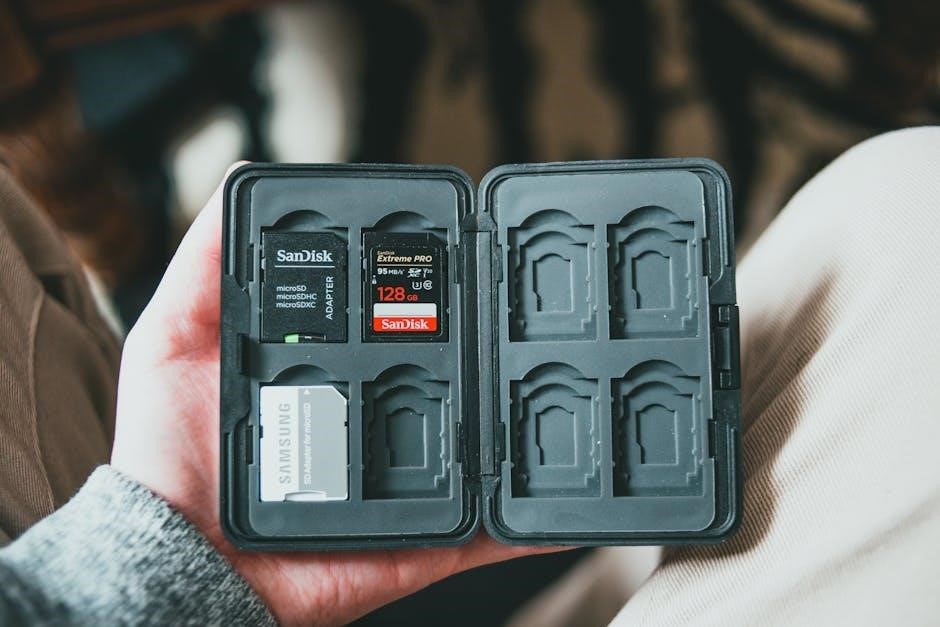
Playlist creation and management were standard, allowing users to organize music by genre, mood, or activity. Many Sansa devices featured expandable storage via microSD card slots, significantly increasing capacity beyond the internal memory.
User manuals, often found on sites like Manualzz, detailed these features. The intuitive interface and simple navigation were hallmarks of the Sansa experience. Furthermore, firmware updates, accessible through SanDisk’s support channels, often enhanced performance and added new functionalities.
Display and Navigation
SanDisk Sansa players typically featured LCD screens, varying in size and resolution depending on the model – from the compact Clip’s monochrome display to the larger, color screens of the Fuze and View. Navigation primarily relied on a combination of a directional pad (or click wheel on some models) and dedicated menu buttons.
Users could browse music libraries by artist, album, song title, or playlist. The menu system was generally straightforward, allowing quick access to settings, radio functions, and playback controls. Manualzz and similar sites often host downloadable user guides illustrating these navigation methods.
Understanding the display icons – representing battery life, playback status, and file format – was crucial for optimal use. The responsiveness of the controls and the clarity of the display contributed significantly to the overall user experience.
Button Functions and Controls
SanDisk Sansa MP3 players utilized a variety of buttons for control, differing slightly between models like the Clip, Fuze, and View. Common functions included a power/hold switch, volume controls (often rocker-style), and directional buttons for menu navigation and track selection. A central ‘select’ or ‘menu’ button confirmed choices and accessed deeper settings.
The Clip series often featured simplified controls due to its compact size, while the Fuze and View offered more extensive button layouts for advanced features. Manualzz provides access to user manuals detailing specific button assignments for each model.
Mastering these controls allowed users to efficiently manage their music libraries, adjust playback settings, and utilize features like the voice recorder (where applicable). Understanding button combinations often unlocked hidden functionalities.
File Compatibility (MP3, WMA, AAC)
SanDisk Sansa MP3 players generally supported a range of popular audio file formats, ensuring broad compatibility with most music libraries. The core supported formats included MP3, widely considered the standard for digital music, and WMA (Windows Media Audio), offering a balance between file size and quality.
Additionally, many Sansa models accommodated AAC (Advanced Audio Coding) files, known for their superior sound quality at comparable bitrates. However, specific model compatibility varied; some older devices might lack full AAC support.
Manualzz provides access to detailed specifications within each model’s user manual, clarifying supported codecs and any limitations. Ensuring files are in a compatible format is crucial for seamless playback on your Sansa device.
Setting Up Your SanDisk Sansa
Initial setup of your SanDisk Sansa is straightforward, designed for a user-friendly experience. Begin by unpacking the device and identifying all included components – typically, this includes the Sansa player itself and a USB cable for connectivity. Before first use, it’s essential to fully charge the player using the provided cable and a compatible USB power source.
Once charged, power on the device. The initial boot-up may prompt you to select your preferred language and set the date and time; Manualzz offers downloadable user manuals that detail these steps for specific models, like the TakeTV and slotMusic versions.
Following these basic steps will prepare your Sansa for music transfer and enjoyment.
Initial Charging and Power On
Before your first listening session with your SanDisk Sansa, a full charge is crucial for optimal performance. Connect the provided USB cable to the Sansa and a powered USB port on your computer or a USB wall adapter. A charging indicator, typically a light on the device, will illuminate to show the charging status.
Charging time varies depending on the model and battery level, but generally takes several hours. Once fully charged, disconnect the USB cable. To power on the Sansa, locate the power button – its position varies by model, so consult your specific user manual (available on sites like Manualzz).
Press and hold the power button until the screen illuminates. The device will then boot up, displaying the SanDisk logo and initiating the setup process.
Transferring Music to Your Sansa
Connecting your SanDisk Sansa to your computer allows you to easily load your favorite music. Use the included USB cable to connect the player to a USB port on your computer. Your computer should recognize the Sansa as a removable storage device, similar to a USB flash drive.
Once connected, open your computer’s file explorer (Windows) or Finder (Mac). Locate the Sansa drive and open it. You can then drag and drop your MP3, WMA, or AAC files directly into the Sansa’s folder structure. Alternatively, you can copy and paste the files.
Organize your music into folders for easier navigation on the player. After transferring, safely eject the Sansa from your computer before disconnecting the USB cable. Resources like Manualzz offer guidance if you encounter issues.
Creating and Managing Playlists
Playlists enhance your listening experience by allowing you to curate collections of songs. On your SanDisk Sansa, navigate to the playlist creation section, typically found within the music menu. You can create a new playlist and then add songs from your library. Select the desired tracks and confirm your additions.
Most Sansa models allow you to rename playlists for easy identification. You can also reorder songs within a playlist to customize the playback sequence. Deleting songs from a playlist doesn’t remove them from your library; it simply removes them from that specific list.
Explore resources like Manualzz for model-specific instructions. Managing playlists effectively keeps your music organized and readily accessible during playback.
Troubleshooting Common Issues
Encountering problems? This section addresses frequent SanDisk Sansa issues. If your player isn’t turning on, ensure it’s adequately charged – a prolonged charge may be necessary. For file transfer problems, verify your USB connection and file format compatibility (MP3, WMA, AAC are generally supported).
Sound quality issues can stem from incorrect equalizer settings or corrupted files. Experiment with the equalizer or try transferring different songs. If problems persist, consult online resources like Manualzz for specific model troubleshooting steps.
Remember to check SanDisk’s official support website for firmware updates, which often resolve bugs. A factory reset (consult your manual!) can sometimes fix persistent issues, but will erase all data.
Player Not Turning On
Is your Sansa unresponsive? The most common cause is a depleted battery. Connect your player to a USB power source using the provided cable and allow it to charge for at least 30 minutes, even if the screen remains blank. A completely drained battery may take longer to respond.
If charging doesn’t resolve the issue, try a different USB port and cable to rule out connection problems. Occasionally, a firmware glitch can prevent startup; attempting a hard reset (refer to your specific model’s manual – often involves holding the power button) might help.
Consult resources like Manualzz for model-specific troubleshooting. If none of these steps work, contacting SanDisk support is recommended, as it could indicate a hardware failure.
File Transfer Problems
Experiencing difficulties transferring music? Ensure your Sansa is properly connected to your computer via USB. Verify the cable is securely plugged into both devices. Sometimes, the player may not appear as a drive; try a different USB port. Confirm your computer recognizes the Sansa as a removable storage device;
Check file compatibility – SanDisk Sansa players generally support MP3, WMA, and AAC formats. Incorrect file types won’t transfer or play. Manualzz provides detailed file compatibility information for specific models. Ensure sufficient storage space is available on your Sansa.
If problems persist, try restarting both your computer and the Sansa. Consider using a different USB cable. If issues continue, consult SanDisk’s support resources for further assistance.
Sound Quality Issues
Poor audio quality? First, verify the volume is appropriately adjusted on both your Sansa and connected headphones or speakers. Ensure your audio files are not corrupted or of low bitrate. Lower bitrate MP3s often sound muffled. Try transferring a different, known-good audio file to test if the issue is file-specific.
Explore the Equalizer Settings within your Sansa’s menu. Experiment with different presets or create a custom EQ profile to enhance the sound. Check for any active sound enhancements on your computer that might interfere with the audio output.
If using headphones, ensure they are functioning correctly with other devices. Consult SanDisk support resources; they may offer troubleshooting steps specific to your model.
Advanced Features & Settings
Unlock your Sansa’s potential! Dive into the advanced settings for a customized experience. The Equalizer allows precise audio tuning, offering presets and custom profiles to match your listening preferences. Explore options for adjusting playback speed – useful for podcasts or audiobooks.
Many Sansa models support customizable themes and display settings. Regularly check for Firmware Updates via the SanDisk website; these often include performance improvements and new features. If your model includes a Voice Recorder, familiarize yourself with its settings for optimal recording quality and storage options.
Investigate folder organization options for efficient library management. Explore any available Bluetooth connectivity settings for wireless audio streaming.
Equalizer Settings and Customization
Fine-tune your audio! The SanDisk Sansa’s equalizer offers extensive control over sound reproduction. Access the Equalizer settings through the player’s menu, typically found within the ‘Playback’ or ‘Sound’ options. Explore pre-set options like ‘Rock,’ ‘Pop,’ ‘Classical,’ and ‘Jazz’ for instant adjustments.
For a truly personalized experience, delve into Custom EQ settings. Adjust individual frequency bands – typically ranging from 60Hz to 16kHz – to boost or reduce specific tones. Experiment to enhance bass, clarify vocals, or reduce harshness. Save your custom profiles for quick access.
Remember to test your settings with a variety of music genres to ensure optimal sound quality across your entire library. Consider using headphones for accurate equalization.
Firmware Updates and Installation
Keep your Sansa current! Regularly updating your SanDisk Sansa’s firmware ensures optimal performance, bug fixes, and potentially unlocks new features. Visit the official SanDisk support website to check for available updates specific to your model.
Typically, firmware updates are downloaded to your computer and then transferred to the Sansa via a USB connection. Follow the on-screen instructions carefully during the installation process. Do not disconnect the player while the update is in progress, as this could cause permanent damage.
The update process usually involves extracting the firmware file to the Sansa’s internal storage or a microSD card. The player will then automatically initiate the update. Allow ample time for completion, and avoid using the player until the process is finished.
Using the Voice Recorder (if applicable)
Capture audio on the go! Certain SanDisk Sansa models feature a built-in voice recorder, allowing you to record memos, lectures, or personal notes. Access the voice recorder function through the player’s menu system – typically found under ‘Record’ or ‘Voice’.
Before recording, ensure sufficient storage space is available. Recording quality can often be adjusted within the settings, offering options for different bitrates and file formats. Higher bitrates result in better audio fidelity but consume more storage.
To start recording, simply select the ‘Record’ option. A visual indicator will confirm recording is in progress. To stop, select ‘Stop’. Recorded files are usually saved in a dedicated ‘Voice’ folder and can be accessed and played back through the player’s music library. Remember to regularly back up your recordings!
Specific Model Manuals & Resources
Locating your SanDisk Sansa manual is easy! For models like the Sansa TakeTV and Sansa slotMusic, online resources are readily available. Websites such as Manualzz host downloadable PDF versions of user manuals and service instructions. These resources provide detailed guidance on setup, operation, and troubleshooting specific to each model.
Finding manuals for discontinued models can be more challenging, but often archived versions exist on enthusiast forums or through internet archive services; Searching specifically for “[Model Name] manual PDF” is a good starting point.
Remember to verify the source’s reliability before downloading any files. SanDisk’s official website may also contain links to archived manuals or FAQs. Utilizing these resources ensures you have the information needed to maximize your SanDisk Sansa experience.
SanDisk Sansa TakeTV Manual Location
Finding the SanDisk Sansa TakeTV manual is straightforward. A primary resource for accessing the Sansa TakeTV user manual is through websites specializing in digital documentation, such as Manualzz. This platform offers a readily available PDF download of the complete user guide, detailing all features and functionalities of the device.
The manual covers topics ranging from initial setup and video playback to navigating the interface and troubleshooting common issues. It’s a valuable resource for understanding the TakeTV’s unique capabilities, including its DVD player integration.
Users can also attempt searches using specific keywords like “SanDisk Sansa TakeTV manual PDF” to locate archived versions or alternative download sources. Always exercise caution when downloading files from unfamiliar websites.
SanDisk Sansa slotMusic Manual Location
Locating the SanDisk Sansa slotMusic manual is easily achievable through online resources dedicated to user manuals. Manualzz serves as a central hub for downloading the Sansa slotMusic user guide in PDF format, providing comprehensive instructions for operating this unique MP3 player.
This manual details the slotMusic’s distinctive feature – its ability to utilize microSD cards for music storage and playback – alongside standard MP3 player functions. It covers topics like file transfer, playlist creation, and navigating the device’s menus. Users will find guidance on maximizing the slotMusic’s portability and storage capacity.
A targeted web search using terms like “SanDisk Sansa slotMusic manual PDF” can also yield results from archived websites and online communities. Remember to prioritize reputable sources when downloading any files.
Finding Manuals for Discontinued Models
Locating manuals for older, discontinued SanDisk Sansa models can present a challenge, but several online resources offer archived documentation. Websites like Manualzz frequently host user manuals for a wide range of SanDisk products, including those no longer actively sold.
When searching, be as specific as possible with the model name (e.g., Sansa Clip Zip, Sansa Fuze). Broad searches may return irrelevant results. Online forums and communities dedicated to SanDisk Sansa players often have threads where users share links to archived manuals or scanned copies.
Utilizing advanced Google search operators (like “filetype:pdf” combined with the model name) can refine your search. While SanDisk’s official website may not directly host these older manuals, these methods significantly increase your chances of success.
SanDisk Sansa Support and Warranty Information
Accessing support and understanding warranty details for your SanDisk Sansa MP3 player is crucial. While SanDisk’s direct support for older Sansa models may be limited, resources are still available. The official SanDisk website provides a support section with FAQs and troubleshooting guides, though specific Sansa information might be archived.
Warranty coverage varies depending on the purchase date and region; Typically, SanDisk offers a limited warranty against manufacturing defects. To initiate a warranty claim, you’ll likely need proof of purchase and a detailed description of the issue.
Contacting SanDisk support directly, through their website or phone number, is the best way to determine current warranty status and claim procedures. Remember to have your model number readily available for efficient assistance.
Contacting SanDisk Support
Reaching SanDisk support for your Sansa MP3 player can be achieved through several avenues, though direct support for older models may be limited. The primary method is via the official SanDisk website, which features a comprehensive support section. Here, you can browse FAQs, troubleshooting guides, and potentially submit a support request.
While a dedicated Sansa support line is unlikely, general SanDisk customer service contact information is available online. This may involve phone support or online chat options. Be prepared to provide your device’s model number and a detailed description of the issue you’re experiencing.
Additionally, online forums and communities dedicated to SanDisk Sansa players can offer peer-to-peer support and solutions. Manualzz and similar sites may also host user manuals and troubleshooting tips.
Warranty Details and Claim Process
Understanding your SanDisk Sansa warranty is crucial. Historically, SanDisk offered limited warranties on their Sansa MP3 players, typically covering defects in materials and workmanship for a specified period – often one year from the date of purchase. However, given the age of many Sansa models, warranty coverage may have expired.

To initiate a warranty claim (if applicable), you’ll generally need proof of purchase, such as a receipt or invoice. The claim process usually involves contacting SanDisk support and obtaining a Return Merchandise Authorization (RMA) number.
You’ll then be instructed to ship the defective device to a designated SanDisk repair center, at your own expense. SanDisk will assess the issue and, if covered under warranty, repair or replace the player. Note that damage caused by misuse or unauthorized modifications voids the warranty.
Frequently Asked Questions (FAQ)
Q: Where can I find a manual for my SanDisk Sansa TakeTV? A: Manuals, including the Sansa TakeTV manual, are often available for PDF download on websites like Manualzz. Searching specifically for “SanDisk Sansa TakeTV manual” will yield results.
Q: What if my Sansa won’t turn on? A: First, ensure it’s adequately charged. If it still doesn’t power on, try a hard reset (consult model-specific instructions). If problems persist, the battery may be faulty.
Q: I’m having trouble transferring files. A: Verify your USB connection and ensure the Sansa is recognized by your computer. Check file compatibility (MP3, WMA, AAC are generally supported). Try a different USB cable.
Q: Where can I find support for discontinued models? A: SanDisk’s official support may be limited, but online forums and communities dedicated to Sansa players can offer valuable assistance and archived resources.